
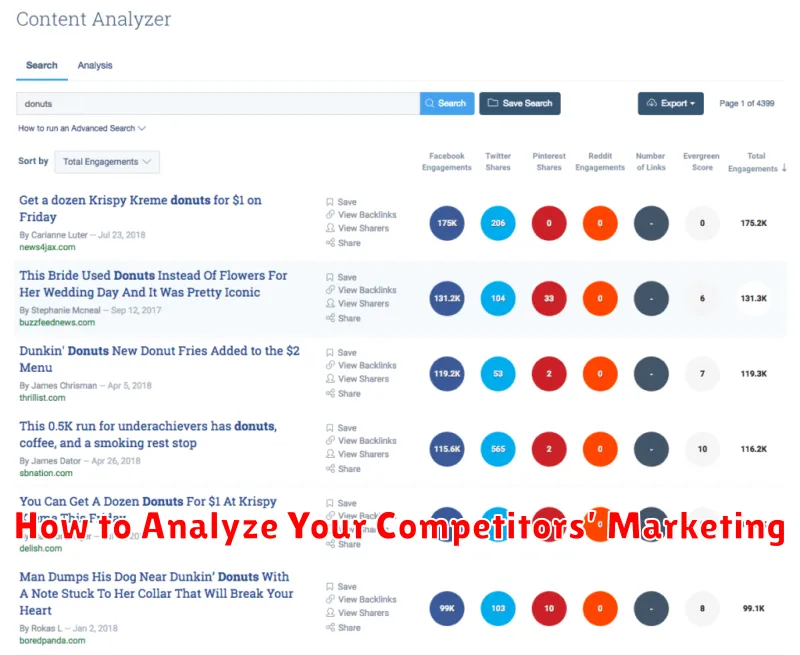
Staying ahead in today’s competitive market requires a deep understanding of your competitors’ marketing strategies. Competitive analysis provides invaluable insights into their strengths and weaknesses, allowing you to identify opportunities and threats to your own business. Learning how to effectively analyze your competitors’ marketing efforts is crucial for making informed decisions and maximizing your return on investment. This article will guide you through a proven process for analyzing your competitors’ marketing, providing you with the knowledge and tools you need to gain a competitive edge and achieve market dominance.
By conducting a thorough competitor analysis, you can uncover the secrets behind your competitors’ successes and failures. You’ll learn how to identify your key competitors, dissect their marketing strategies, and evaluate their marketing channels, including their social media marketing, content marketing, and search engine optimization (SEO) tactics. We’ll explore techniques for analyzing their target audience, messaging, and overall marketing performance. Ultimately, this knowledge will empower you to refine your own marketing strategy, optimize your campaigns, and achieve greater market share.
Why Competitive Analysis Matters
Competitive analysis is crucial for understanding your market landscape. It provides valuable insights into your competitors’ strengths and weaknesses, allowing you to identify opportunities and threats.
By analyzing your competitors’ marketing efforts, you can gain a better understanding of their target audience, messaging, and channels. This knowledge empowers you to make informed decisions about your own marketing strategy, optimizing your campaigns for maximum effectiveness and return on investment.
Ultimately, competitive analysis enables you to differentiate your brand, refine your value proposition, and gain a competitive edge in the marketplace.
Identifying Key Competitors
Identifying your key competitors is the first step in a competitive analysis. Start by brainstorming companies that offer similar products or services. Consider both direct competitors, who target the same audience with similar offerings, and indirect competitors, who address the same customer need with a different approach.
Refine your list by researching companies that appear in search engine results for relevant keywords. Utilize online tools that reveal competitor data based on website traffic and social media presence. This helps prioritize competitors based on market share and visibility.
Finally, consider conducting customer surveys or interviews to understand who your target audience considers their alternative choices. This customer-centric approach can reveal hidden competitors and provide valuable insights into market perception.
What to Analyze

A thorough competitive analysis involves examining various aspects of your competitors’ marketing strategies. Focus on analyzing their target audience to understand who they are reaching and how. Identify their value proposition and how they communicate it to their customers. Carefully examine their marketing channels, including social media platforms, email marketing, and advertising campaigns. Look at their content strategy and the type of content they produce, such as blog posts, videos, or infographics.
Pay close attention to their pricing strategy and how it compares to yours. Investigate their promotional tactics, including discounts, contests, and partnerships. Finally, assess their customer experience to identify areas where they excel and where they fall short. This multifaceted approach will provide valuable insights to inform your own marketing strategy.
Social Media Activity
Analyzing competitor social media reveals valuable insights. Identify which platforms they use, their posting frequency, and the type of content they share. Examine their audience engagement metrics, including likes, comments, and shares. This data helps understand their social media strategy’s effectiveness and identify potential opportunities or gaps in your own approach.
Pay close attention to the tone and style of their communication. Do they prioritize humor, educational content, or promotional posts? Understanding their brand voice can inform your own social media messaging and differentiate your brand.
SEO Performance Comparison
A crucial aspect of competitor analysis involves comparing SEO performance. This helps identify content gaps and opportunities to outrank competitors. Keyword rankings are a key metric. Analyze which keywords your competitors rank for, and compare them to your own rankings.
Examine their backlink profiles. A strong backlink profile indicates authority and can significantly impact search rankings. Tools like Ahrefs or SEMrush can provide insights into competitor backlinks. Finally, assess organic traffic. Comparing traffic estimations can reveal the effectiveness of their SEO strategies and highlight potential areas for improvement in your own approach.
Email Marketing Tactics
Analyzing competitor email marketing provides valuable insights. Identify the types of emails they send, such as newsletters, promotional offers, or welcome series. Frequency is key; note how often they email subscribers. Examine their subject lines for effectiveness and keywords. Content analysis reveals their messaging, tone, and target audience. Pay attention to their call to action and any personalization techniques. This data helps you understand their email strategy and identify opportunities to improve your own.
Ad Spend and Targeting
Analyzing competitor ad spend and targeting provides valuable insights into their marketing strategies. Estimating their budget allocation across different channels like search, display, and social media helps understand their priorities.
Identifying their target audience reveals who they are trying to reach. Look for demographic information, interests, and online behavior. This knowledge can inform your own targeting decisions, helping you identify potential opportunities or refine your existing approach.
Tools that provide competitive analysis can often offer estimates on ad spend and audience demographics. Use this data to identify potential gaps in your competitors’ strategies, or areas where they are particularly successful. This information is crucial for maximizing your own return on ad spend.
Tools for Competitor Tracking
Leveraging the right tools can significantly streamline your competitor analysis process. SEMrush and Ahrefs are powerful platforms providing comprehensive data on keywords, backlinks, and website traffic, enabling you to benchmark against competitors. SimilarWeb offers insights into website traffic sources and audience demographics, helping you understand competitor strategies.
For social media monitoring, tools like Brand24 and Mention track brand mentions and social conversations, allowing you to analyze competitor social media performance and identify emerging trends. Utilizing these tools empowers you to make data-driven decisions and refine your marketing strategies for a competitive edge.
Benchmarking Your Brand
Benchmarking involves comparing your brand’s performance against key competitors. This process helps identify areas where your brand excels and where improvements are needed. Focus on comparing relevant marketing metrics.
Analyze metrics such as website traffic, social media engagement, and conversion rates. By understanding your competitors’ strengths and weaknesses, you can refine your marketing strategy to be more effective. A competitor analysis matrix can be a useful tool for organizing this data.
Building a Competitive Edge
After thoroughly analyzing your competitors, leverage the insights gained to build a competitive edge. Identify areas where you can outperform them, whether it’s through superior product features, more effective marketing campaigns, or stronger customer service.
Focus on developing unique selling propositions (USPs) that differentiate your brand and resonate with your target audience. This could involve highlighting specific benefits, offering competitive pricing, or building a strong brand identity. A well-defined USP gives customers a compelling reason to choose your business over the competition.
Continuously monitor your competitors and adapt your strategies as needed. The market is constantly evolving, so maintaining a competitive edge requires ongoing analysis and adjustment.
