
Are you tired of low email open rates? Do you feel like your carefully crafted messages are disappearing into the digital abyss? Increasing your email open rates is crucial for successful email marketing. Open rates are a key performance indicator (KPI) that directly influences the effectiveness of your campaigns. Higher open rates mean more people are engaging with your content, which can lead to increased conversions, stronger brand loyalty, and ultimately, greater return on investment (ROI). This article will explore some simple, yet highly effective strategies to boost your email open rates and revitalize your email marketing efforts.
From crafting compelling subject lines to optimizing your sender name and preview text, there are several practical steps you can take to grab your audience’s attention and encourage them to open your emails. We’ll delve into the importance of email list segmentation, discuss the best practices for sending frequency, and explore the impact of mobile optimization on email open rates. By implementing these simple strategies, you can significantly improve your email marketing performance and see a tangible increase in your email open rates.
Understanding Open Rate Metrics
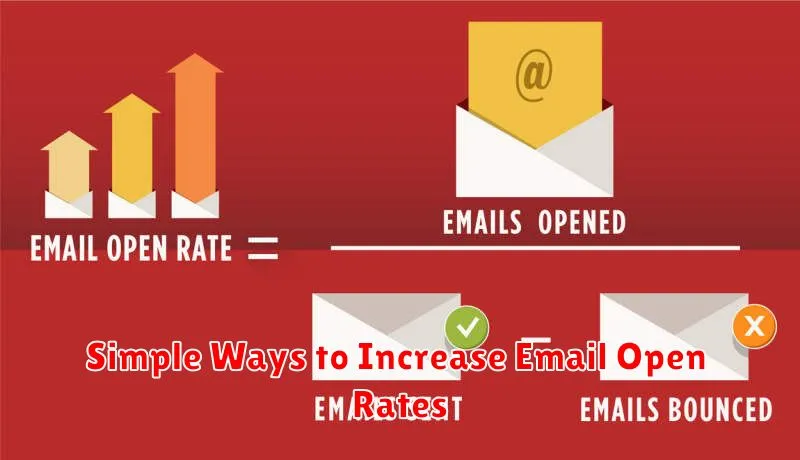
Open rate is a key metric in email marketing, representing the percentage of recipients who opened your email. It’s calculated by dividing the number of unique opens by the number of emails delivered, excluding bounces. A high open rate suggests a compelling subject line and targeted audience. However, it’s important to understand that open rates are not always perfectly accurate.
Email clients often block images by default, and the tracking pixel used to register an open is typically embedded in an image. This means an email is only counted as “opened” if the recipient enables images. Therefore, the open rate is generally considered a reasonable estimate, but not a perfect representation of true engagement.
The Power of a Subject Line
The subject line is the first, and often only, impression you make on a potential reader. It’s the gatekeeper to your email’s content. A compelling subject line significantly impacts your email open rates. A weak subject line often leads to emails being ignored or deleted, rendering the rest of your email marketing efforts futile.
Crafting an effective subject line requires careful consideration. Think about what would pique your interest. Keep it concise and to the point, highlighting the value proposition within the email. Testing different subject lines through A/B testing can help you determine what resonates best with your target audience.
Timing Your Emails Right

Sending emails at the optimal time can significantly impact your open rates. Timing is crucial. Analyze your audience’s behavior to understand when they’re most likely to engage with their inbox. Consider their time zone, work schedules, and daily routines.
Experiment with different send times to determine what works best. A/B testing different schedules can reveal valuable insights. While there’s no one-size-fits-all answer, Tuesdays and Thursdays are often cited as high-engagement days. Focus on finding the sweet spot for your specific audience.
Segmentation and Personalization
Segment your email list based on demographics, behavior, or purchase history. This allows you to send targeted emails that resonate with specific groups.
Personalize your emails beyond simply using the recipient’s name. Tailor content and offers to match their individual interests and past interactions with your brand. This makes the email feel more relevant and increases the likelihood of it being opened.
Preheader Text Optimization
Preheader text, the snippet of text visible after the subject line in many email clients, offers a valuable opportunity to boost open rates. Optimize this space by extending your subject line and providing a compelling preview of your email’s content. Keep it concise and action-oriented.
Think of the preheader as a second subject line. Use it to create a sense of urgency, highlight a key benefit, or personalize the message. Testing different preheader variations can help determine what resonates best with your audience and drives higher opens.
Avoiding Spam Triggers
Certain words and phrases can trigger spam filters, significantly impacting your email open rates. Avoiding these triggers is crucial for ensuring your message reaches your intended audience.
Common spam triggers include excessive use of capital letters, exclamation points, and dollar signs. Words like “free,” “guarantee,” and “limited time” should be used sparingly and with caution. Additionally, avoid misleading subject lines that don’t accurately reflect the email’s content.
Testing your emails with different spam filter tools can help identify potential problems and improve deliverability. By being mindful of these triggers and regularly testing your emails, you can significantly increase the chances of your messages landing in the inbox.
Using A/B Testing
A/B testing is a powerful tool to optimize email open rates. It involves sending two slightly different versions of your email to separate segments of your audience. These versions may differ in aspects like subject lines, sender names, email content, or send times. By analyzing the performance of each version, you can identify which elements resonate best with your subscribers.
Track metrics such as open rates and click-through rates to determine the winning variant. Then, apply those learnings to future email campaigns for improved performance. A/B testing allows for data-driven decisions, moving away from guesswork and towards effective email marketing strategies.
Cleaning Your Email List
Maintaining a clean email list is crucial for improving open rates. Removing inactive subscribers, such as those who consistently don’t open your emails, is the first step.
This practice helps improve your sender reputation with email providers. A high sender reputation means your emails are more likely to land in the inbox, not the spam folder. It also provides more accurate metrics. By removing inactive addresses, your open and click-through rates will better reflect engagement with active subscribers.
Regularly cleaning your list, perhaps quarterly or bi-annually, can have a significant positive impact on your overall email marketing effectiveness.
Building a Reputation Score
Email service providers (ESPs) utilize a complex system to determine your sender reputation. This “score” significantly impacts your email deliverability, and subsequently, your open rates. A low reputation often leads to emails landing in spam folders, while a high reputation ensures inbox placement.
Several factors contribute to this score. Consistent sending volume is key. Avoid sudden spikes or prolonged inactivity. Low bounce rates are crucial. Regularly clean your email list to remove invalid addresses. Minimize spam complaints by providing valuable content and clear unsubscribe options.
Tracking with Analytics Tools
Leveraging analytics tools is crucial for understanding email campaign performance. These tools provide key metrics such as open rates, click-through rates, and bounce rates. Consistently monitoring these metrics allows you to identify what’s working and what needs improvement.
Most email marketing platforms offer built-in analytics dashboards. However, dedicated analytics tools can provide more granular data and advanced reporting features. This data empowers you to make data-driven decisions to optimize your email campaigns for better open rates.
